The season · Seasonal Edits
Boot Shaft Against Trouser Hem Width
Boot shaft height against trouser hem width: which combinations bunch above the ankle, which stack, and how much opening a shaft actually needs.
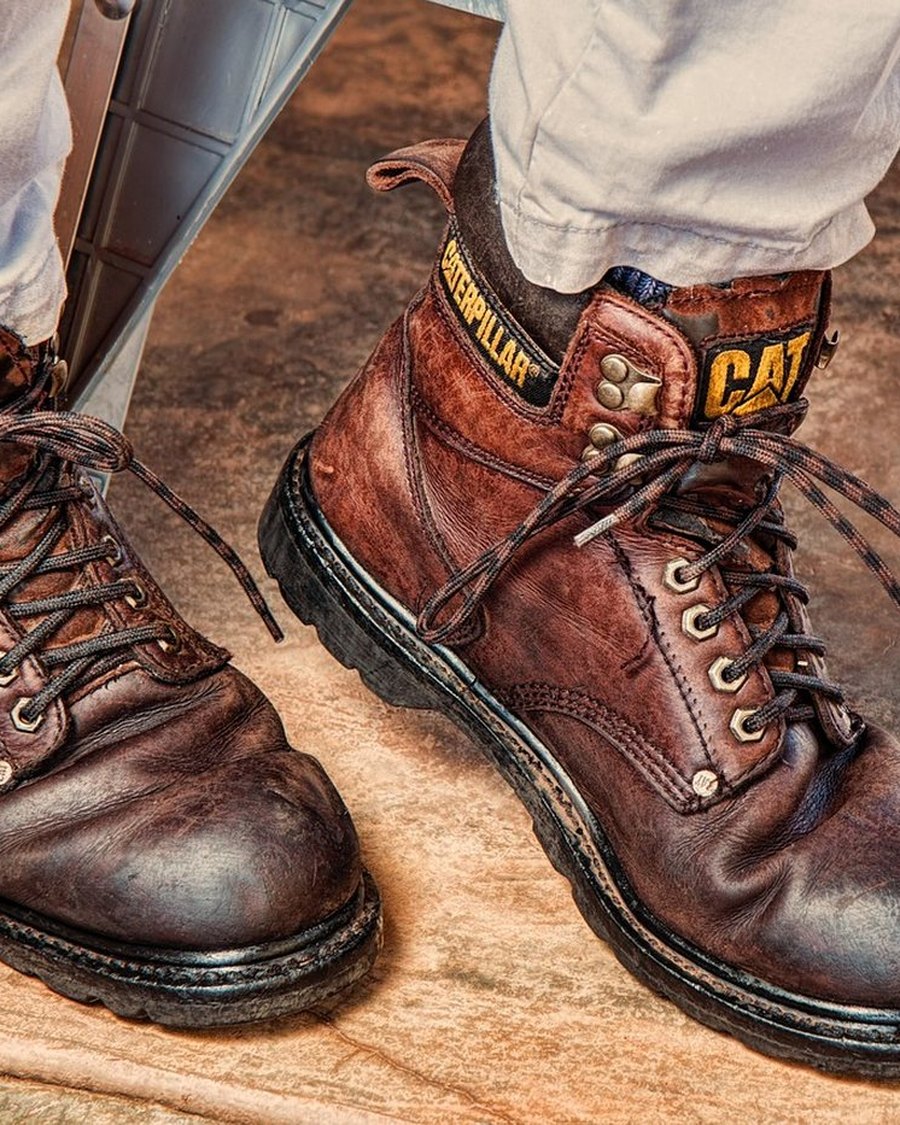
A trouser hem and a boot shaft meet at one point, and that point decides whether the break looks intentional. A 7-inch hem over a 15-inch shaft cannot pass the boot, so it rests on the top edge and the surplus length folds upward. A 10.5-inch hem over a 4-inch ankle boot has nothing to rest on and swings free. Both garments can be correct alone and wrong together.
Shaft height, and where the tape starts
Boot charts quote shaft height from the top of the heel or from the sole to the top of the shaft at the back. The two conventions differ by roughly half an inch to an inch, the same order as the difference between a half break and a full one, so know which is used.
Three bands cover almost everything sold. Ankle boots run 4 to 6 inches, mid-calf boots 9 to 12, and knee-high boots 15 to 17. A 16-inch shaft reaches mid-calf on a 5-foot-3 wearer and stops well below the knee on a 5-foot-9 one, so shaft height has to be read against leg length in the same way coat length is.
Opening circumference matters at least as much. A knee-high top commonly measures 14 to 16 inches around, a mid-calf 13 to 15, an ankle boot 10 to 12. A stretch panel or a full-length zip changes that figure by about an inch, and a boot with neither will not close on a calf at the top of its range.
The hem clears a circumference, not a width
Leg-opening figures are flat measurements, taken across the hem with the trouser laid flat. Double them before comparing with a boot. A 7.25-inch opening is a trouser circumference of 14.5 inches, which clears a 12-inch ankle boot and fails against a 15-inch knee-high.
The hem also has to clear more than the arithmetic suggests, for three reasons. It is double thickness at the fold, it has to pass the heel and instep as the foot swings through, and it needs slack to hang rather than cling. That adds up to about 2 inches of circumference, which is 1 inch flat.
| Shaft height | Boot top circumference | Flat hem that falls over | What a narrower hem does |
|---|---|---|---|
| 4-6 in ankle | 10-12 in | 7 in and up | Nothing; the hem swings free |
| 9-12 in mid-calf | 13-15 in | 7.5-8.5 in | Sits on the top edge, folds above |
| 15-17 in knee | 14-16 in | 8-9 in | Cannot pass, accordions at the knee |
Some brands list leg opening as a half measure and some as a full circumference, a factor of two. A “7.5 inch leg opening” that is really a circumference describes a narrow cigarette trouser, not a straight one. Check the column heading first.
Three shaft heights, three behaviors
An ankle boot is the easiest case because there is no shaft to clear. The hem only has to pass the shoe collar, which is why almost any trouser works. The failure here runs the other way: a wide hem of 10 inches or more over a 4-inch boot has nothing to rest on, so it moves with every step and the break never settles.
A mid-calf boot is where most bunching happens. The top edge sits at roughly 13 to 15 inches around, and a straight trouser hem at 8 inches flat is 16 inches around — enough to fall over, but only just, and only if the cloth is fluid. In crisper cotton or wool the hem catches on the top edge and the surplus folds into a ring above it.
A knee-high boot almost always takes the trouser inside. The shaft top is 14 to 16 inches around and the hem has to pass the widest part of the calf on the way down, not just the opening. Tucking is the reliable answer; a hem worn over the shaft needs 8 to 9 inches flat, a straight or wide cut, and a cloth with enough weight to fall rather than cling.
When the hem cannot clear the shaft
The excess length has to go somewhere. A hem that cannot continue downward collapses at the obstruction, and every inch of surplus produces roughly one fold. One fold at the shaft top reads as a mistake because it sits too high to be a break; two or three folds read as a stack, but only when the cloth is heavy enough to hold the shape.
Widening is sometimes possible. An outseam with a half-inch seam allowance can usually give up half an inch flat, occasionally an inch, which is exactly the margin needed for a 15-inch boot top. Inseams rarely have the same allowance, and a tapered leg cut close at the ankle cannot be widened without changing the line of the whole trouser.
The alternatives are cheaper. Tuck the trouser into the boot, which suits a straight or narrow leg and a shaft with a zip. Or shorten the hem to stop an inch above the shaft top, which turns the problem into a cropped trouser and works with an ankle boot underneath. Or choose a boot with a lower shaft: 7 to 8 inches instead of 11 removes the obstruction without touching the trouser.
Four breaks and what each needs
A full break is one soft fold where the hem meets the shoe, produced by about an inch of extra length. A half break is half an inch and is the safest over a boot, because the shaft stays visible without exposing sock. No break leaves a quarter inch or less and needs a narrow hem and a flat sole, since there is no fold to absorb error.
Stacking is two or more folds up the shin. It needs two inches or more of extra length, a hem wide enough to fold without pulling, and a cloth with some weight. On a lightweight cotton the same two inches produces a crumple, not a stack.
Bunching is not a break. It is fabric that has run out of room, and it reads as a fit error at any length.
Cuffs change the arithmetic
A turn-up of 1.25 to 1.5 inches doubles the cloth at the hem and adds weight there, which stiffens the last few inches and helps it fall over a shaft rather than catch. It also shortens the leg by the depth of the cuff, so a trouser bought to stack has to be bought long enough to stack after cuffing, not before.
Cuffing can also pull the opening in: four layers of cloth at the fold measure a little narrower than the hem did flat. Measure after the cuff is stitched, especially against a 15-inch boot top.
Hem to the boot you wear most
Trousers are hemmed once, for one pair of shoes, and the arithmetic should use the least forgiving pair: the tallest shaft and the thickest sole. Hem to that with a half break. Every other boot then gets a slightly longer break, which is invisible, rather than a shorter one, which exposes sock.
The difference is measurable. A boot with a 1-inch sole against one with a quarter-inch sole changes the break by three quarters of an inch, which is the gap between a half break and a full one. Inseam against heel height sets that figure, and leg opening from 7 to 11 inches gives the width side of the same decision.
Coat length enters as well. A hem that stops at mid-calf lands within an inch or two of a knee-high boot top, and coat length against height works out where that point falls before the trousers are cut.
Frequently asked
- Should trousers go over or inside boots?
- Over an ankle boot, always. Over a knee-high boot, only if the flat hem opening is about an inch wider than half the shaft circumference. A narrower hem cannot pass the shaft and bunches above it instead.
- Why do my trousers bunch above my boots?
- Because the hem is narrower than the boot it is trying to sit over, so the excess length accordions at the shaft top. Either widen the hem, shorten the trouser to sit above the shaft, or tuck the trouser into the boot.
- What is the difference between stacking and a full break?
- A full break is one soft fold where the hem meets the shoe, roughly an inch of extra length. Stacking is two or more folds up the shin, which needs two or more inches of extra length and a hem wide enough to fold without pulling.