The season · Seasonal Edits
Three Knit Coats Compared by Fibre and Shoulder Drop
Three knit coats and coatigans compared on fiber content, weight, shoulder drop and how each holds its shape through a season of wear.
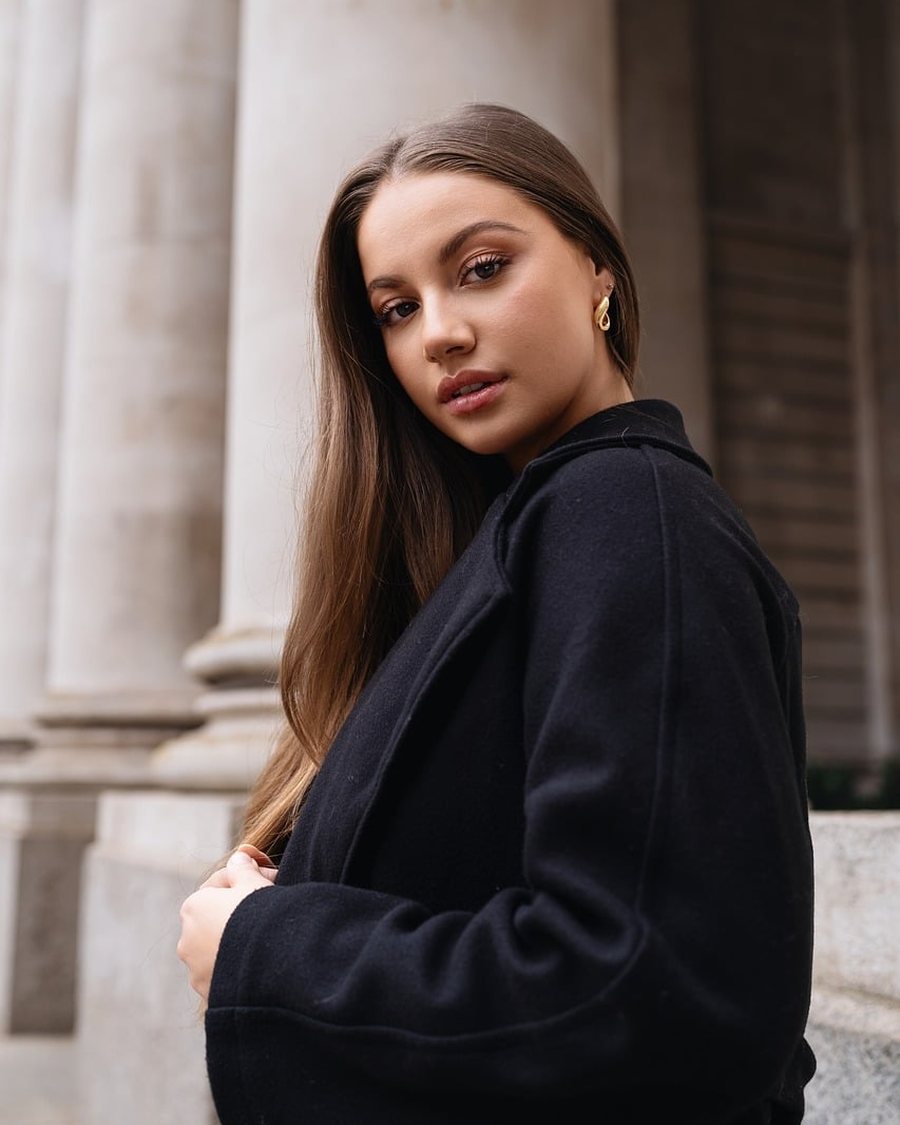
A knit coat is a sweater asked to do an outerwear job, and fiber content decides how that argument ends. Wool and cotton hold their shape for years; acrylic and polyester hold the price down and the shape for a season. Two of the three below are sold as cardigans, which is the same garment with the closure left off, and at USD 29.99 to USD 79.90 the difference between them is mostly a question of what happens in month four.
Fiber first, then the seam
Two numbers decide most of the behavior: the share of natural fiber, which regulates temperature and pills slowly, and where the shoulder seam sits, because a knit has no canvas or interlining, so the seam is the shape.
Natural fiber is a mechanical category before it is a moral one. Wool has crimp, so the yarn springs back after it is stretched and the garment recovers at the elbow. Cotton has almost no crimp but good wet strength, so it bags and then recovers in the wash. Acrylic has neither, which is why a stretched acrylic cuff stays stretched.
None of the three publishes a gauge figure in the sense a sweater listing would, and none publishes a weight. What they do publish places them well enough: 100% cotton, a blend with 8% wool, a blend with 5% wool. In the shortlist they appear as Quince Knit Coat, Uniqlo Souffle and H&M Long Cardigan.
What a knit cannot do as outerwear
A knit is a loop structure. Between the loops are openings, and openings pass air. A woven coat resists wind because its yarns cross at right angles and are packed tight, and a lining adds a second barrier behind them. A knit has one barrier and it is porous, so below about 45°F with any wind, a knit coat is a sweater with ambitions.
It also has no structure to lose. A woven coat holds its shape through canvas and interlining; a knit holds it through the seam, the rib and the mass of the cloth. That is why long knits carry a rib at the hem: it is structural rather than decorative, and it is what stops the coat growing downward under its own weight.
Wet is the third limit. Cotton takes up water, gets heavier and loses some of its strength while damp, so a long cotton coat in rain grows at the hem and dries slowly on the shoulders. Acrylic barely absorbs water, but the cloth collapses when wet and stops trapping air, which is the only thing it was doing. Wool is the one that keeps some insulation while damp.
The honest framing is that these are layers rather than coats. They work between a shirt and a shell, which is the arrangement a shoulder-season order sets out, and they fail as the outermost thing on a cold, wet day.
The cotton one: Quince
The 100% Organic Cotton Knit Collarless Coat from Quince is USD 79.90, in 100% organic cotton, OEKO-TEX certified, with a 34-inch body length in a size small and a relaxed fit. It has an open front, patch pockets and horn buttons, and it is made in Shanghai.
Cotton is why this one holds a line. There is no loft to collapse, so the front hangs straight from the shoulder instead of settling into the body, and the collarless neck keeps the chest flat. That combination is what makes it read as a coat rather than a long cardigan: the eye gets one vertical edge and no lapel to break it.
The 34-inch figure is the only length any of the three publishes. Body length is measured from the high point of the shoulder, at the base of the neck, straight down. The page states the model is 5 ft 9 in and wearing a small, which puts 34 inches around mid-thigh on that frame; on a shorter wearer the same coat lands closer to the knee.
The trade is weight. Thirty-four inches of cotton knit is a real mass on the shoulders, and a wool coat of half that mass would be warmer. Shoulder construction is not published, so whether that mass sits on a seam or spreads across a dropped shoulder has to be judged on the body.
Care is the argument for buying it: machine wash cool, tumble dry low or hang to dry, which almost no wool coat at this price allows. A washable coat gets worn in the rain and over a greasy table, and that is most of the cost per wear.
The blended one: Uniqlo
The Souffle Yarn Relaxed Cardigan is USD 49.90 at Uniqlo, in 57% acrylic, 32% recycled polyester, 8% wool and 3% spandex, cut longer than a standard cardigan with a relaxed silhouette.
The word souffle describes the yarn, not the garment: it is brushed, so the surface fibers are raised into a halo. That halo is soft against the neck and light on the shoulder, and it is where pills form first, because raised fibers are short fibers with nothing holding their ends. Uniqlo states that pilling may develop as part of the fabric’s texture and that pills should be cut rather than pulled, which is an unusually honest line for a product page.
Eight percent wool buys softness and a little warmth, not durability: durability in a knit comes from fiber length and twist, and neither improves by blending a little wool into acrylic. The 3% spandex is doing more work than the wool: it gives the cuffs and hem a recovery that the acrylic alone would not have, and it fatigues over a season of daily wear.
Care is the hidden cost. Hand wash cold or dry clean, on a USD 49.90 garment, means either an evening at the sink or a recurring bill. As a layer for a mild evening over a shirt it earns its price. As the coat worn five days a week from October, it will show wear at the underarm before the season turns.
The cheap one: H&M
The Long Cardigan from H&M is USD 29.99, in 52% polyester, 40% acrylic, 5% wool and 3% spandex, with dropped shoulders, long sleeves, ribbing at the cuffs, hem and back neck, and no closure.
The fiber order explains the behavior. Polyester leads, giving the cloth tensile strength and shape through washing; acrylic follows, giving the soft hand and the pilling. Five percent wool is a label claim rather than a behavior: it softens the surface and adds nothing measurable in warmth at that share.
No closure is a design decision with a consequence. There are no buttons to pull or buttonholes to stretch, so the coat hangs open in two straight panels. It also means no wind protection at the front: fine for the intended use, useless for the claim of being outerwear.
What the piece does have is proportion. A dropped shoulder and an open front produce the oversized line that costs far more elsewhere, and at this price that line is the product. Buy it if the silhouette is the point and the lifespan is not.
Shoulder drop, and what it does to width
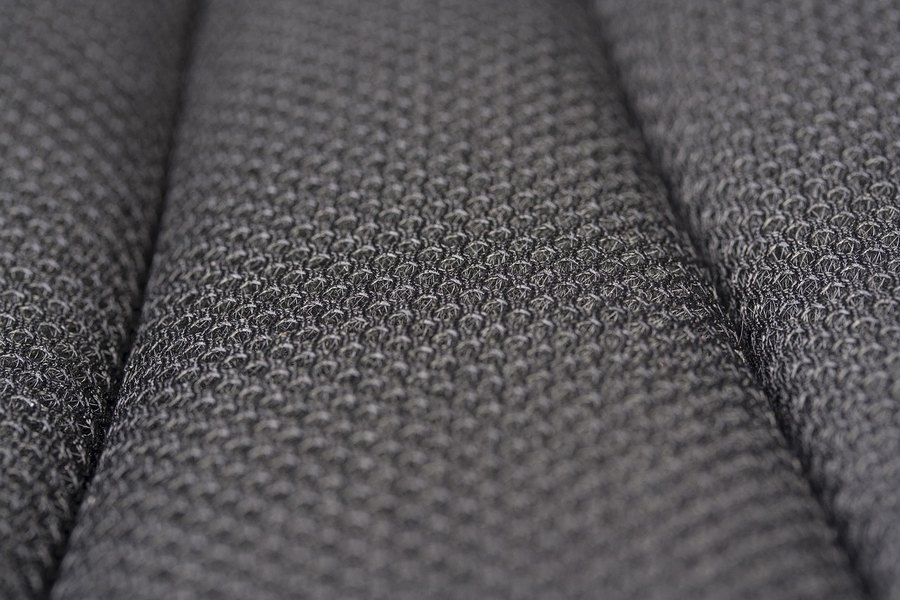
A dropped shoulder moves the seam outward along the arm, away from the shoulder bone. On a knit that has two measurable effects.
The first is width. Every centimeter the seam moves outward adds a centimeter to each side of the body, so the flat measurement across the chest grows by twice the drop. A coat with a 6 cm drop measures 12 cm wider than the same block with a set-in shoulder, which is the whole difference between a tailored line and a relaxed one.
The second is sleeve length. Sleeves are measured from the seam, so a dropped seam starts lower on the arm and the same sleeve length ends higher on the wrist. Buyers who size down to correct the width get a shorter sleeve and a tighter armhole, which is the wrong trade: the width was the design, and the sleeve was the casualty.
Only the H&M states the drop outright. Uniqlo describes the fit as relaxed and does not publish a shoulder measurement; Quince publishes neither, so its 34-inch length has to be judged on the body. The wider question of where a seam belongs on any garment is covered in shoulder seam placement.
Gauge and stitch, the numbers nobody prints
Gauge is needles per inch on the knitting machine, and it decides how a knit behaves over 34 inches of length. A fine gauge at that length, around 12, would stretch under its own weight and grow at the hem within a month. A very coarse gauge, around 3, would be too warm indoors and too heavy for the shoulder. The workable range for a long coat is the middle, roughly 5 to 9 gauge, which is where all three of these sit by inference rather than by disclosure.
Stitch structure matters as much as gauge. The same machine can knit jersey, rib or a tuck stitch, and each traps a different amount of air; a 7-gauge rib is denser than a 7-gauge jersey because the stitches fold over each other.
At the rail, hold the hem to the light and count the wales across an inch; then stretch it sideways and let go. A dense, tightly gauged knit returns; an open one stays wider. Gauge explained covers what each band does to warmth and drape.
Holding shape through a season
Pilling is the first visible change and it starts at the underarm, where the sleeve rubs the body with every step. Short fibers work loose, tangle into small balls and stay attached until they are cut or pulled. Cut them: pulling takes fresh fiber with the pill and makes the next one larger.
Hanging is the second. A long knit on a hanger carries its whole weight from two points at the shoulder, and it grows there, which is why the shoulder line of a knit coat becomes rounded by spring. Fold these, do not hang them, and fold them on the widest shelf available so the fold does not become a permanent crease.
Washing is the third, and it separates the three. Cotton relaxes in water and tightens as it dries, so the Quince recovers some of what it lost. Acrylic has no crimp to return to, so the Uniqlo and H&M pieces keep whatever shape the last wearing gave them. How a knit recovers goes through the fiber mechanics.
What goes underneath it
The layer under a knit coat has to be thin enough that the coat still hangs from the shoulder rather than from the shirt. A cotton poplin shirt works. A shirt plus a 12-gauge merino crew works in cold, and it is warmer than a heavier coat alone because the fine knit traps air close to the body while the coat stops it moving.
What does not work is a heavy cable knit underneath. Two thick knits rubbing at the armhole produce friction, pills and a bunched sleeve, and the coat loses the straight line that was the reason to buy it. In rain, the order reverses: the knit coat becomes the mid-layer and a shell goes over it.
The three divide cleanly by intent. Buy the Quince to keep, wash and wear for years, accepting the mass. Buy the Uniqlo for a soft evening layer and a hand wash. Buy the H&M for the silhouette, knowing the fiber will not outlast it. None of them replaces a woven coat in wind, and all three are better than a woven coat at sitting in a chair.
The shortlist
What we would pick
Some links below are affiliate links — we may earn a commission at no extra cost to you.
Three long knit layers at three fiber qualities. The Quince coat is the only one built from a single natural fiber, the only one that publishes a body length, and the only one that can be machine washed; the Uniqlo and H&M pieces buy their length and volume with acrylic blends carrying 5 to 8 percent wool. Buy the cotton one to keep, the blends for the silhouette, and none of them as the outermost layer on a cold, wet day.
- Range compared
- 3 coats, USD 29.99-79.90
- Fabric
- Cotton vs acrylic blends
- Key spec
- Fiber share and shoulder drop
- Only published length
- 34 in (Quince, size S)
- Suits
- Layering between 40 and 60°F
100% Organic Cotton Knit Collarless Coat
USD 79.90Quince
100% organic cotton, OEKO-TEX certified, made in Shanghai, with a 34-inch body length in a size small and a relaxed fit. The open front, horn buttons and patch pockets are listed; there is no closure beyond the buttons, so the front hangs in two straight panels. Cotton has no loft to collapse, which is why the line holds from the shoulder down, and the collarless neck keeps the chest flat. The page states the model is 5 ft 9 in and wearing a small, which puts 34 inches around mid-thigh on that frame. Shoulder construction is not published. Machine wash cool and tumble dry low or hang dry, the only one of the three that allows it.
- Fabric
- 100% organic cotton
- Body length
- 34 in (size S)
- Shoulder
- Not published
- Closure
- Open front, patch pockets
- Care
- Machine wash cool, tumble dry low
Souffle Yarn Relaxed Cardigan
USD 49.90Uniqlo
57% acrylic, 32% recycled polyester, 8% wool and 3% spandex in a brushed knit, cut longer than a standard cardigan with a relaxed silhouette. The brushing raises surface fibers into a halo, which is soft at the neck and is also where pills form first, because raised fibers are short fibers with nothing holding their ends. Uniqlo states that pilling may develop as part of the fabric's texture and that pills should be cut rather than pulled. Eight percent wool buys softness and a little warmth, not durability. Hand wash cold or dry clean, which is a recurring cost the price does not show. Neither body length nor shoulder drop is published.
- Fabric
- 57% acrylic, 32% recycled polyester, 8% wool, 3% spandex
- Body length
- Longer length, not published
- Shoulder
- Relaxed; drop not published
- Closure
- Open front
- Care
- Hand wash cold, dry clean
Long Cardigan
USD 29.99H&M
52% polyester, 40% acrylic, 5% wool and 3% spandex in a soft fine knit, with dropped shoulders, long sleeves and ribbing at the cuffs, hem and back neck. No buttons and no closure, so it hangs open like a coatigan and offers no wind protection at the front. Five percent wool is a label claim rather than a behavior: it softens the hand and adds nothing measurable in warmth. Polyester leads the blend, which is what gives the cloth its shape through washing. The dropped shoulder is the only construction detail on any of the three that the brand states outright. Machine wash cold, line dry.
- Fabric
- 52% polyester, 40% acrylic, 5% wool, 3% spandex
- Body length
- Long, not published
- Shoulder
- Dropped
- Closure
- None, open front
- Care
- Machine wash cold, line dry
| Specification | Quince Knit Coat | Uniqlo Souffle | H&M Long Cardigan |
|---|---|---|---|
| Price | USD 79.90 | USD 49.90 | USD 29.99 |
| Main fiber | 100% organic cotton | 57% acrylic | 52% polyester |
| Wool content | 0% | 8% | 5% |
| Body length | 34 in (size S) | Longer, not published | Long, not published |
| Shoulder | Not published | Relaxed, not published | Dropped |
| Closure | Open front, buttons | Open front | None |
| Care | Wash cool, tumble low | Hand wash, dry clean | Wash cold, line dry |
Where these numbers come from
Frequently asked
- Is a knit coat warm enough for winter?
- Only in the way a heavy sweater is. A knit blocks wind poorly compared with a woven coat, so it needs a wool layer underneath in cold and a shell over it in wind. Its advantage is that it moves and sits like a garment rather than a shell.
- What does shoulder drop change on a knit coat?
- A dropped shoulder moves the seam off the shoulder bone and onto the upper arm, which adds width across the back and shortens the effective sleeve. On a long coat that extra width is what makes the silhouette read relaxed rather than tailored.
- Why do knit coats pill at the underarm first?
- The underarm is where the sleeve rubs the body with every step, so short fibers work loose and cluster there before anywhere else. Fiber length and yarn twist decide how quickly, which is why a cheap wool can outlast an expensive cashmere at the same wear count.