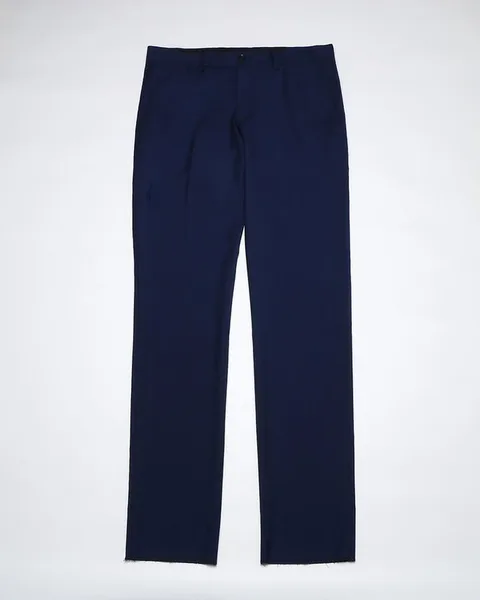
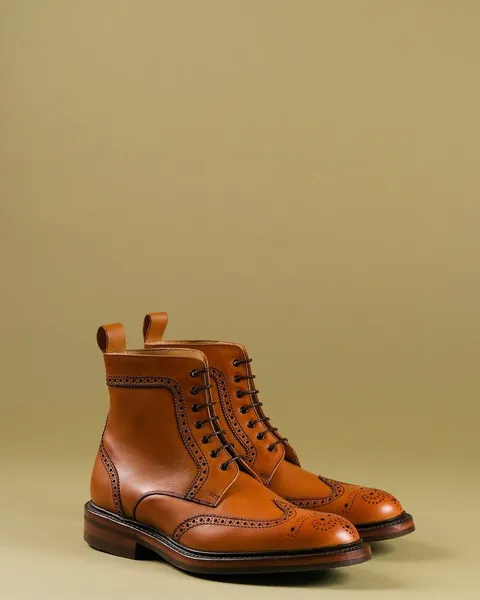
The formula · Outfit Formulas
Outfit Formulas for a Short Torso
A short torso changes where the waistband lands. How rise, crop point and layer length should shift when the torso, not the leg, is short.

A short torso is a measurement the pattern did not use. The distance from shoulder to natural waist is shorter than the block assumes, so a waistband arrives closer to the ribs, a cropped jacket lands lower than it looked on the model, and a top sold as hip-length covers the waistband completely. Nothing about the frame is wrong. The horizontal lines are being spent in the wrong places.
Measure the waist before the wardrobe
Stand relaxed, arms down, and measure from the bony point at the top of the shoulder to the natural waist: the crease that forms when you bend sideways, at or just above the navel. Then measure from that crease to the floor. Take both twice; the first attempt usually drifts by half an inch.
The second number makes the first one meaningful. Fifteen inches of shoulder-to-waist against 30 inches of waist-to-floor is a short torso on long legs, and the fix is mostly above the waist. Fifteen against 26 is a compact frame where the leg is short too; there, cropping will not help and rise will. Size charts grade by height and bust, so neither figure appears on the label, and a petite top is shorter in the sleeve and the body at once, whether or not your arms needed it.
Rise is absolute, your waist is not
Front rise runs from the crotch seam to the top edge of the waistband, measured flat with the fly closed; the conventions behind that figure are set out in rise, explained in numbers. It is a fixed distance: an 11-inch rise sits 11 inches above the crotch seam on anyone.
What varies is where the natural waist sits above that seam. If your waist is 13 inches above the crotch, an 11-inch rise lands two inches below it and behaves like a mid rise. If the waist is 10 inches above the crotch, common on a short torso, the same trouser puts the band an inch above the natural waist, on the lower ribs.
That inch has consequences beyond proportion. Above the natural waist the body is wider, so the band needs more room to close at all, and the same pair can fit at the hip and gape at the center back. It is also where sitting becomes a problem: the top edge presses on the ribs, and no belt adjustment fixes it.
Take the measurement in front of a mirror with the tape vertical, from the crease to the crotch seam, and subtract it from the rise on the chart. A result of zero to minus one inch is a band at or just under the waist, leaving a panel of shirt to tuck. A result above zero means the band is heading for the ribs and that panel is disappearing. The rise figures that read formal in work trousers are the same numbers doing the same thing to a shorter space.
The crop point has two answers, not a range
A hem can end at the top edge of the waistband, or at least four inches below it. Between those points is a dead zone: a hem floating an inch above the band adds a line and covers nothing, and a hem two inches below the band adds length where the torso has none to give.
Body length predicts which one you are buying. Measure a top that already lands well, shoulder seam to hem, and compare it with your shoulder-to-waist figure. On a 15-inch torso, 15 to 16 inches ends at the band and 21 to 23 inches ends at or below the hip bone. Anything between 17 and 20 inches lands in the dead zone, which is why a regular-length top can read as slightly wrong without being the wrong size: it was graded for a torso three inches longer.
Jackets follow the same arithmetic, taken at the center back from the collar seam. A jacket that ends at the hip covers the waistband and moves the visible waist down to its own hem. If the jacket is already owned, wearing it open restores the vertical line the closed hem removed.
The waist read
There are two horizontal lines to spend between shoulder and hip. The waistband is nearly always one of them, because the trouser has to close somewhere. That leaves one for a belt, a top hem, a jacket hem or a color change, not four.
Tuck depth is the first place this goes wrong. A shirt tucked with two inches of blouson above the band produces a hem line plus a band, two lines where the outfit had budget for one. Tuck flat, or leave the shirt out and let it cover the band; the tuck-or-untuck decision comes down to where the untucked hem lands, which on a short torso is the only question worth asking.
Belts are the second. A 1.5-inch belt occupies a tenth of a 15-inch torso, and worn at the natural waist it doubles a line the waistband has already drawn. If the rise is high, skip it.
Long layers, kept open
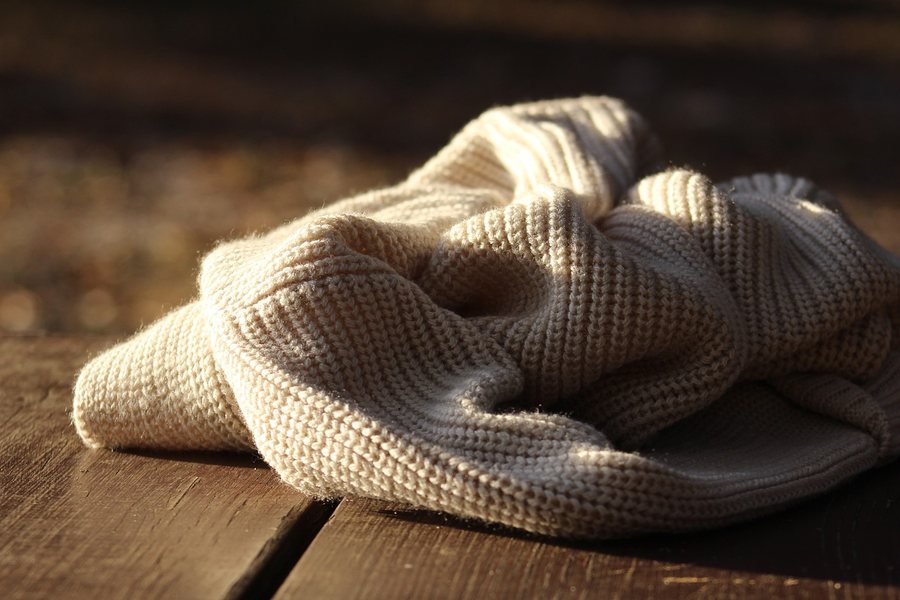
An open layer does not add torso even at mid-thigh, because the eye follows two vertical edges rather than a horizontal hem. The condition is that it stays open below the waist. Button a long cardigan, or tie a trench, and the same garment becomes a closed column with a low hem: the one thing a short torso cannot absorb.
The layer’s shoulder seam still has to fit: a seam that drops down the arm moves both vertical edges outboard. Color is the other half: three colors, one of them small keeps the change away from the waist, so the band stays the only break in the column.
When the torso is not the short part
Two frames get called short-torsoed and only one of them is. If the shoulder-to-waist number is average and the waist-to-floor is short, the torso is fine and the leg is short. Cropping tops will make the leg read shorter still; the useful levers are hem and rise.
Petite sizing does not separate the two. It shortens the body, the sleeve and the rise together, on the assumption that everything scaled down, which is rarely true of one person. A petite jacket can fit the torso and be short in the arm; a regular jacket can fit the arm and add two inches below the waist.
There is also a hard limit on repair. A top can be shortened for the price of a hem. A jacket can come up about an inch and a half before the pockets stop it. A torso cannot be lengthened at all, which is why the buying decision carries more weight than the fitting decision.
What to check before the tags come off
Four tests, all quick. Sit for ten minutes and see whether the band has climbed onto the ribs. Reach overhead with the shirt tucked and see whether the hem clears the band. Look at a jacket’s back length against the waist from three paces, where the proportion reads the way other people see it. Then check that the top’s hem sits at the band or at the hip, with nothing between.
If two fail, the garment is the wrong proportion rather than the wrong size, and the next size up will not fix it. A return is cheaper than the alteration.
Frequently asked
- Does a short torso mean I should avoid high-rise trousers?
- Not always. An 11-inch rise on a short torso can reach the rib cage and leave very little visible top. A 9- to 10-inch mid rise usually leaves room for a tucked shirt. Judge it with the shirt you plan to wear, not on the hanger.
- Where should a cropped jacket end?
- At or just below the natural waist, not at the hip. A jacket that ends at the hip adds a horizontal line exactly where the torso already ends. Check the back length against your shoulder-to-waist measurement before buying.
- Are long layers off-limits?
- No. A long open layer works when the inner column is short and the layer stays open, so the vertical line is unbroken. The problem is a long, closed top that covers the waistband and removes the only waist line in the outfit.