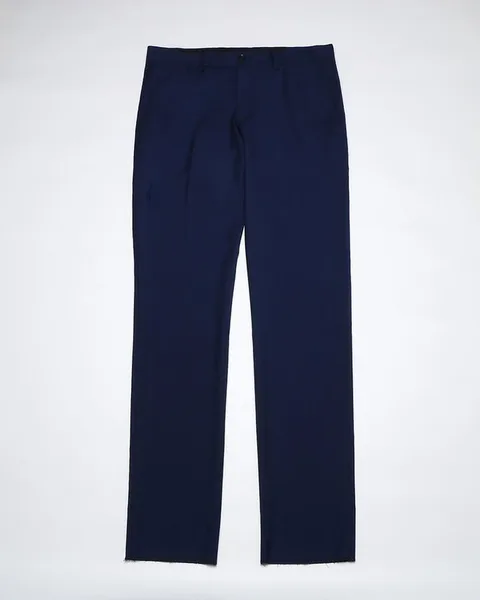
The formula · Outfit Formulas
Build the Outfit Around One Shoe
Build the outfit from the shoe up. Sole thickness sets the hem, toe shape sets the leg opening, and heel height sets the break.
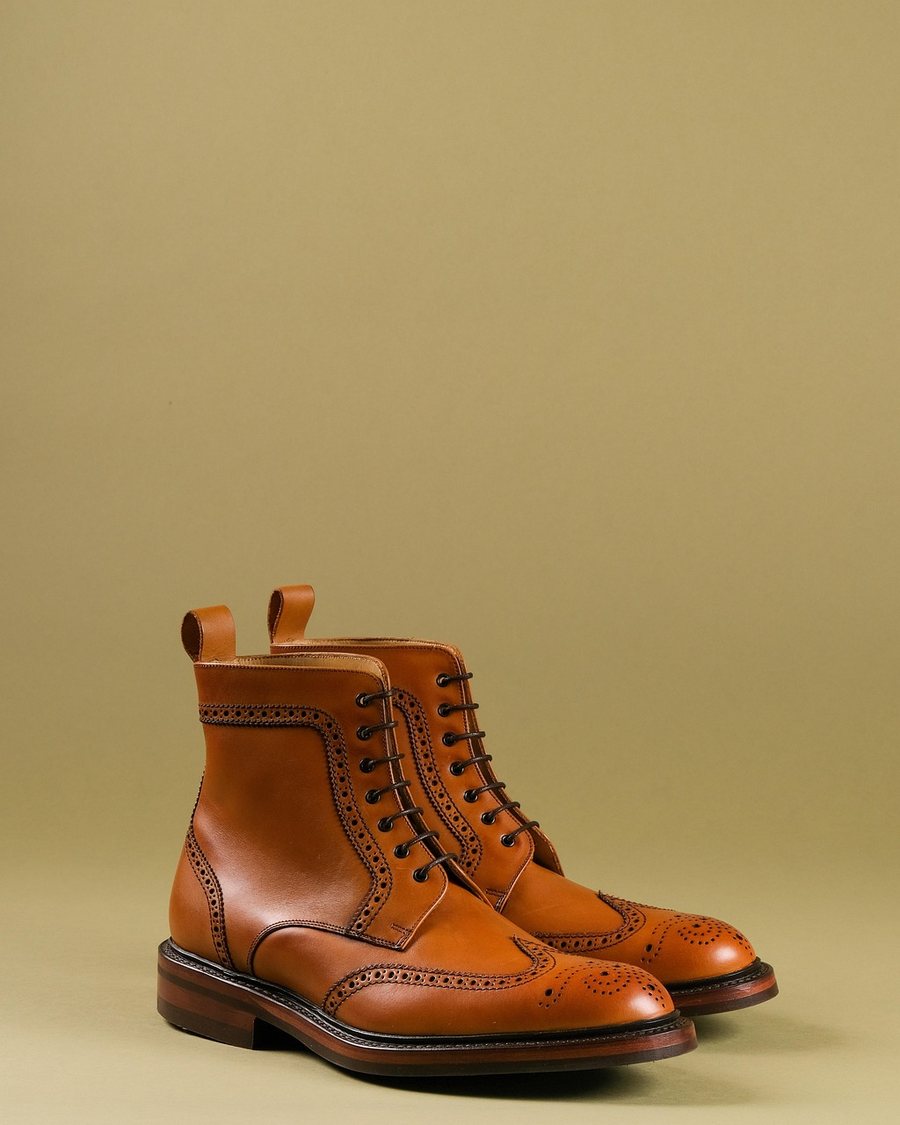
Most trousers are hemmed to whatever shoes happened to be in the room, and the error only surfaces when the shoes change. The hem is fixed cloth; the shoe moves the floor under it. That asymmetry is the whole arithmetic: sole thickness sets where the hem lands, toe shape sets how much room the hem needs, and heel height sets how the cloth falls at the back.
Measure the shoe in three places
Put the shoe on a table and take three figures. Sole depth at the heel, sole depth under the ball of the foot, and the widest horizontal measurement across the toe box. Add heel height if the shoe has a separate heel block, and include the welt or the lug in the sole figure rather than measuring only the midsole.
The three numbers move independently, which is why a single “shoe height” figure is useless. A leather dress sole is often around a quarter-inch thick at the forefoot; a lug sole can run an inch or more; a platform sneaker adds its stack under the whole foot. A block heel lifts the back of the foot without lifting the toe at all, so the hem meets the shoe at a different angle at each end.
The hem arithmetic
The target is a hem that clears the ground at the back by a quarter to half an inch, with the front just touching the shoe. Anything below that is a break; anything above it is exposed ankle and sock.
Work the sum in one direction only. If a 30-inch inseam is hemmed for a quarter-inch leather sole and the shoe is replaced by a one-inch lug, the hem now sits three-quarters of an inch higher relative to the ground. The trouser has not moved; the floor did. Three-quarters of an inch is enough to show sock when walking and enough to make a straight leg read as cropped.
Closing that gap needs either a longer inseam, a lower shoe or a cuff that can be let down. A hem allowance of 1.5 inches is standard on tailored trousers and enough to recover most shoe changes; a jean hemmed and cut at the shop has no allowance at all, which is the argument for asking them to keep the offcut.
| Shoe | Sole at forefoot | Sole at heel | Inseam change against a flat loafer |
|---|---|---|---|
| Leather loafer | 0.25 in | 0.5 in | none |
| Derby or plain boot | 0.4 in | 1 in | +0.25 in |
| Lug-sole boot | 1 in | 1.25 in | +0.75 in |
| Platform sneaker | 1.2 in | 1.2 in | +1 in |
Those are starting figures. Measure the pair: a 1-inch lug can sit 1.3 inches off the ground once the footbed is counted.
Toe shape sets the leg opening
A hem is a tube, and it has to pass over the widest cross-section of the shoe, not over the foot. When the tube is narrower, the surplus cloth has nowhere to go but up, and the stack forms above the shoe.
That is why toe shape matters more than shoe length. A pointed toe is long but low and narrow, so a 7- to 8-inch opening on a tapered trouser clears it. A round or square toe is shorter and wider and needs 8 to 9 inches. A chunky boot or a platform sneaker needs 9 inches or more, because both the width and the height of the cross-section have grown.
Measure the opening the same way the shop does: lay the trouser flat at the hem and measure across, then double it. A “7-inch leg opening” usually means 7 inches flat, or 14 inches of circumference, which is the number that has to clear the shoe. The leg opening guide works the same figure from the trouser side.
Heel height and the break
Break is the cloth that folds over the instep. A full break puts one clear fold across the shoe and touches the laces; a slight break just kisses the shoe; no break hangs clear.
A two-inch heel raises the back of the foot by roughly two inches, which pulls the back hem up by the same amount and converts a full break into a slight one. Drop to a flat and the same trouser pools: a pair hemmed for heels looks abandoned in flats, and a pair hemmed flat looks eaten by a heel.
The cost sits at the fold. Wool abrades where it creases, and a full break on a worsted trouser worn five days a week will show a worn line above the hem within a season. Cotton duck and denim tolerate it better. If the shoe is a flat and the trouser is wool, a slight break is both the cleaner line and the longer-lived one.
Boots and shaft clearance
A boot adds a fourth measurement: the circumference of the shaft at its widest point, usually just above the ankle. Compare it with the hem circumference, not the flat width. A hem narrower than the shaft sits on the boot and rides up as the leg swings; one only an inch or two wider collects in folds at the ankle. Three inches of clearance or more falls past the shaft cleanly, which is why an 8-inch opening can look tidy over a 13-inch shaft and crowded over a 15-inch one.
The alternative is a hem that stops above the shaft top, a deliberate cropped length that makes the sock part of the outfit; a hem landing mid-shaft is the worst of the three, catching on the leather as the leg swings. A tapered hem seats more easily than a straight one, and the hem is the place to solve it, not the boot.
One shoe across several trousers
A hem can serve shoes within about half an inch of each other in height. Beyond that, one pair of trousers is being asked to do two jobs and will do neither well: too long for the flat, too short for the heel.
Three ways out, in order of cost. Keep the offcut and rehem when the shoe rotation changes. Wear a cuff on the longer pair, since a turn-up can be released or deepened by half an inch without recutting. Or accept two lengths and treat the trouser as belonging to one shoe.
The order of decisions
Shoe first, then hem, then leg opening, then top. The shoe decides the bottom two inches of the outfit, and those two inches decide whether the leg reads as a continuous line.
The reverse is expensive: choosing the trouser first makes the hem a compromise between every shoe in the closet, and the compromise shows at the ankle. The commute shoe’s sole and heel is worth measuring for the same reason: it is the pair worn most, so it should set the length the others are judged against.
Where the advice stops working is an extreme shoe. A very chunky sole needs a wide or a long trouser and will dictate the bottom half of every outfit it enters; a very fine pointed toe needs a clean hem with no stack. That is a reason to decide whether the shoe is the center of the outfit or a supporting piece, and to hem accordingly.
Frequently asked
- Should trousers be hemmed before or after choosing shoes?
- After. The sole thickness and heel height change where the hem lands by half an inch or more. Hem to the pair you will wear most, and keep the offcut so a second pair of shoes can be accommodated later.
- What leg opening suits a chunky sole?
- A wider opening, generally 9 inches or more, clears a lug sole without stacking. A 7- to 8-inch opening catches on a thick sole and breaks above it, which shortens the visible leg line.
- Can one shoe work with both tailored and casual outfits?
- A plain leather boot or a low-profile sneaker can. The limit is contrast: a technical running shoe needs a casual hem, and a pointed heel needs a clean, narrow one. Match the shoe to the trouser finish, not the other way around.