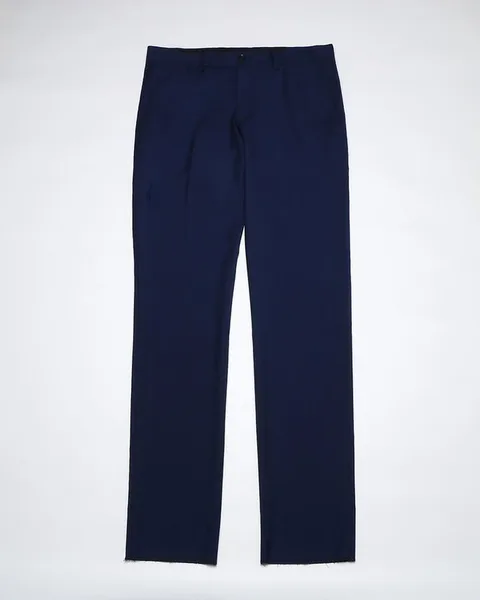
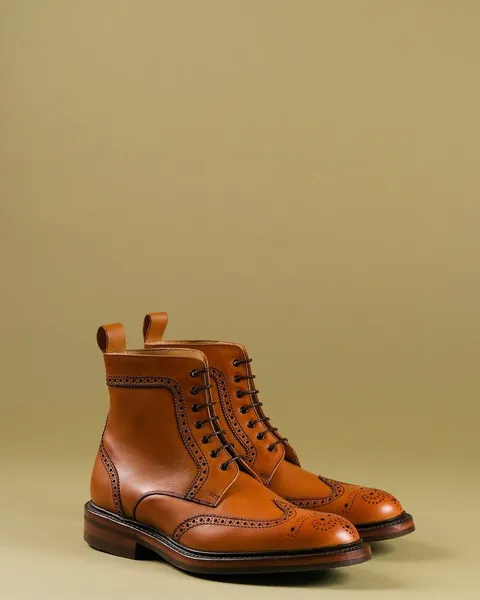
The formula · Outfit Formulas
An Outfit That Survives a Twelve-Hour Day
A twelve-hour outfit is a fabric recovery problem and a shoe-volume problem: the rise that holds a tuck, the knit that survives a jacket, what to remove at seven.

A twelve-hour day is three outfits in sequence: a commute spent standing in a coat, six hours in a chair, and a dinner where the jacket comes off. The failures rarely show at eight in the morning. They appear at the lap, where a soft wool has creased, at the knee, where a cotton has bagged, and at the heel, after twenty minutes of walking.
The day is three rooms
The three rooms have different demands, and the outfit has to answer all of them without being changed. A platform at eight in the morning is warm from bodies and cold from doors. A meeting room at eleven is held at 72°F and sealed. A restaurant at nine is warmer than either, and the jacket comes off.
Each transition removes a control. On the platform you can keep the coat on; in the meeting you can roll a sleeve; at dinner the jacket is on the back of the chair. That is why the layer underneath has to work alone: the knit, the shirt, the trouser and the shoe are the outfit, and the jacket is the part that leaves.
Creasing is a recovery problem
A chair presses on the seat and behind the knee for most of the day, and pressure is what makes cloth look tired. Wool recovers because of the crimp and elasticity of the fiber, the property Woolmark’s fiber descriptions call resilience. Worsted suiting is commonly milled at 240 to 280 GSM, and at that weight it returns close to its pressed line after an hour of sitting.
Linen at around 180 GSM does not recover; it creases by design, and a linen trouser will show the lap and the seat by lunchtime. Cotton twill keeps the fold it takes, which is why a chino looks soft rather than sharp at four in the afternoon.
Weight is not the answer on its own. Flannel at 300 GSM recovers well but is too warm for a room held at 72°F, and warmth is the second failure. The useful band for a trouser that has to sit through a working day is 240 to 280 GSM in a worsted or a wool-blend twill, with enough elastane to help the cloth spring back at the knee.
Pressing is the repair, not the prevention. A fold from sitting hangs out overnight on a wide wooden hanger; a crease steamed in stays until the next clean. The jacket should go on the hanger the moment it comes off, because a jacket folded over a chair back takes the shape of the chair by morning.
Heat is a layer-count problem
A room at 72°F is comfortable in a shirt and uncomfortable in a shirt, a 12-gauge knit and a lined jacket. The body generates heat continuously, and each layer traps it. Three layers at a desk is one more than the room requires; the same three layers on a platform in January is right.
The practical rule is to run one layer cooler than the room suggests, because the commute adds heat before the office removes it. A coat over a knit over a shirt, worn on a crowded train, produces sweat at the back and under the arms, and damp wool loses the shape it had when it was dry. Carry the coat rather than wear it on the last ten minutes of the journey.
Fabric choice matters inside the layers too. A tightly woven poplin traps vapor; an oxford with a coarser weave passes it. Merino absorbs moisture and releases it slowly, which is why it feels dry against the skin when cotton feels clammy. A lining in a trouser adds warmth at the seat, where sitting already concentrates it.
The visible failure is a shirt that sticks to the back of a chair and peels away when you stand. The fix is one fewer layer, a looser shirt, or a knit that can be removed without revealing a damp shirt underneath.
The rise decides the tuck
A front rise of 10.5 to 11 inches puts the waistband at or above the navel, where a tucked shirt has something to hold against and a belt sits on bone rather than soft tissue. At a 9-inch rise the waistband crosses the hip, and the shirt climbs every time you stand. Rise, explained in numbers sets out where each inch lands on the body.
The shirt matters as much as the trouser. A 26-inch body length with a straight hem can be worn out over a 9-inch rise and still look deliberate. A 29-inch shirt in the same trouser covers the pocket and reads as a tunic by four in the afternoon. Tuck the longer shirt, or choose the shorter one and leave the waistband alone.
Shoe wear is decided by the sole
Distance is decided before the outfit is, which is why the commute shoe begins with sole thickness rather than heel shape. A block heel of 1.5 to 2 inches on a rubber sole of about 10 mm handles twenty minutes of sidewalk. A 3-inch heel on a leather sole does not, however good it looks at the table.
The sole matters more than the heel. Leather transmits every joint in the concrete; rubber at 8 to 12 mm absorbs it. Wear shows first at the outside rear corner, where the heel strikes, and a cobbler can replace that top piece before the sole itself is gone. A leather sole worn through at the toe is a resole, which costs more than the shoe is worth on a cheap pair.
The toe has to follow the trouser. A 7.5-inch leg opening covers the vamp of a loafer and leaves the toe clear; a shoe with more volume pushes the hem out of line and the trouser starts to look short. A pointed toe extends past the hem and gives it something to break against; a round toe with a low vamp leaves the cloth hanging.
Remove one thing at seven
The instinct at the end of a long day is to add: a scarf, a brighter lip, a second layer. The clothes work better when something comes off. The jacket goes first. It has held the shoulder line all day and creased least. Then the knit cuff, folded back 1.5 inches so the shirt cuff shows at the wrist.
What stays is the trouser, the belt and the shoe, which have already proved they can take the day. Adding a fresh garment at that point introduces something the previous eleven hours have not tested, and the mismatch shows: a crisp scarf against a creased lap.
The four tolerances
| Slot | Number | Failure if missed |
|---|---|---|
| Rise | 10.5 in or more | shirt climbs when standing |
| Leg opening | 7 to 8 in | hem rides over the shoe |
| Knit | 12 gauge, 180 to 240 GSM | bulk under the jacket |
| Heel | 1.5 to 2 in on a rubber sole | the walk ends early |
A 12-gauge knit at 180 to 240 GSM fits under a jacket without changing the shoulder line, as knit gauge at a desk explains; a 7-gauge at 350 to 450 GSM adds a few millimeters at the chest and the jacket pulls across the back. The same logic runs through heat and fabric weight: the number on the label is a tolerance, not a preference.
Those four figures are the frame within which one outfit can move from a platform at seven to a table at nine without being changed. Outside them, the day is spent adjusting: pulling a shirt down, pushing a sleeve up, sitting carefully to protect a hem. The clothes should be the part of the day that requires no management.
Frequently asked
- Which fabric creases least over a long day?
- Wool, particularly worsted wool between 240 and 280 GSM, recovers from sitting pressure better than linen or cotton twill. Linen creases by design, and cotton twill holds whatever fold it takes at the knee and the lap.
- Should a shirt be tucked for a long day?
- Tuck it if the front rise is 10 inches or more and the shirt body length is under 28 inches. Below a 10-inch rise, a long shirt works loose every time you stand, so a shorter hem worn out is the more reliable choice.
- Which shoe survives twelve hours?
- A block heel of 1.5 to 2 inches on a rubber sole of 8 to 12 mm, with a toe that matches the trouser hem. Heel height matters less than sole material, because leather transmits what rubber absorbs.