The office · Workwear
The Commute Shoe: Sole Thickness, Heel and What Survives a Walk
Sole thickness in millimeters, heel height and outsole material decide whether a shoe survives a commute. What each number means on wet pavement.
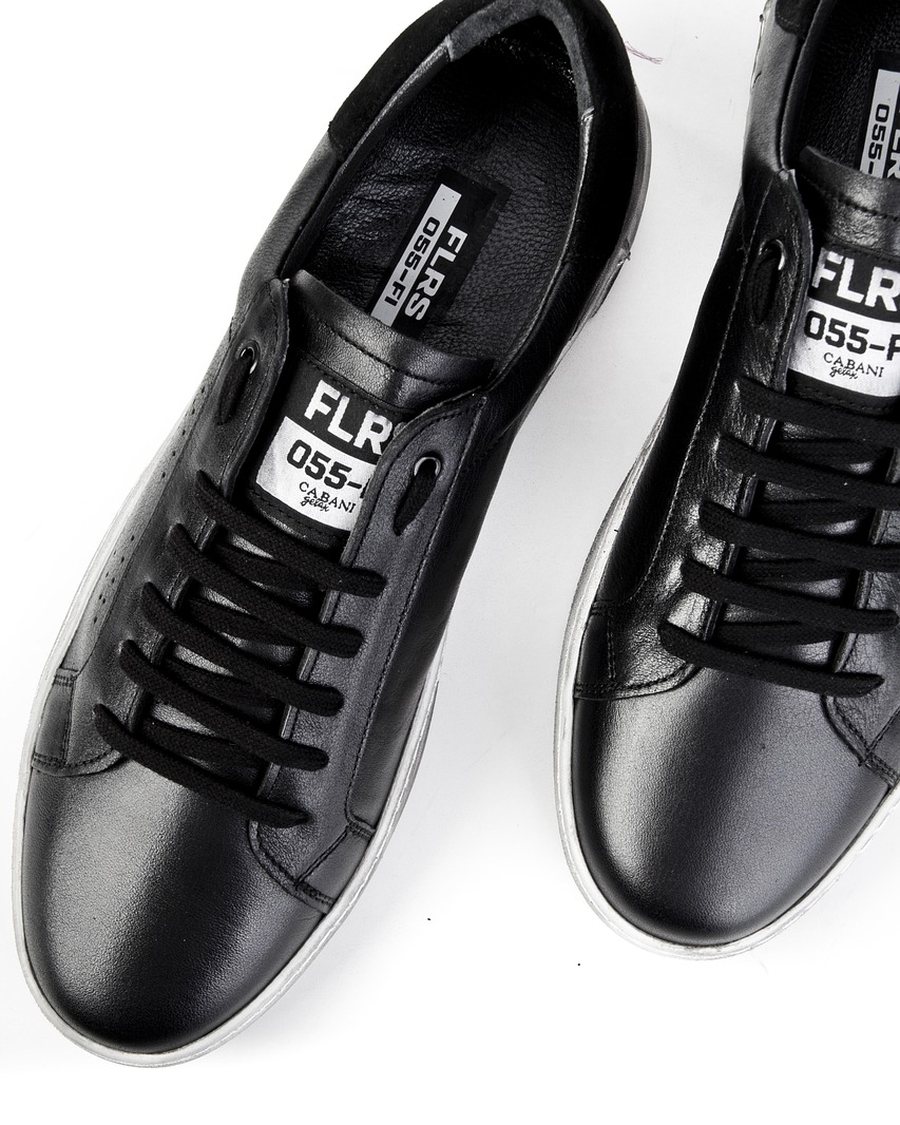
A commute is a distance problem before it is a style problem. The pair that looks right at a desk often fails at the third block, and the pair that survives the walk can read too casual by the time the elevator opens. Three numbers separate the two: sole thickness at the forefoot, the pitch the heel actually produces, and whether the outsole is leather or rubber.
Sole thickness and the flex test
Forefoot stack heights vary more than product pages suggest. A leather-soled loafer usually sits at 8 to 12 mm at the forefoot with a separate heel lift of 18 to 25 mm. A cupsole sneaker runs 22 to 30 mm. A lugged boot reaches 30 mm with 4 to 5 mm of tread cut into it.
Below about 10 mm, stone, grating and tree roots arrive through the sole undiluted. Above 25 mm with no flex groove at the ball, the shoe stops bending where the foot bends and the walk turns into a rocking motion the calf has to absorb. The test takes five seconds in a shop: hold the heel in one hand, press the toe upward with the other, and watch where the sole folds. It should break at the ball, roughly two thirds of the way forward, not at the arch.
Heel height, pitch and the platform offset
Published heel height is measured at the back of the heel, but what the foot feels is pitch: heel height minus any platform under the forefoot. A 60 mm heel on a 10 mm platform walks like a 50 mm heel. A 70 mm heel with no platform walks like 70.
Two related numbers rarely appear on a product page. A block heel of 20 to 25 mm adds height without changing where the foot strikes, which is why it walks differently from a stiletto of the same height. And a heel set about 5 mm forward of the back edge of the shoe stabilizes the landing; one set flush at the edge makes the ankle balance on every step instead.
Outsole material on wet stone
Leather outsoles are the weakest choice in wet weather and the strongest in dry. They breathe, they mold to the foot, and they look correct under tailoring. Water enters at the welt, the stitched seam joining upper to sole, and a soaked leather sole needs a day or two to dry from the inside.
| Outsole | Forefoot thickness | Wet grip | Drying time |
|---|---|---|---|
| Leather, single | 8-12 mm | Very low on stone and metal | 24-48 hours |
| Leather with topy | 10-14 mm | Moderate | 12-24 hours |
| Rubber cupsole | 22-30 mm | Good | 2-4 hours |
| Lugged rubber | 25-32 mm | Good, strongest on gravel | 4-6 hours |
Rubber grips, but not all rubber grips equally. Blown rubber is softer and holds wet pavement better than dense rubber, at the cost of wearing faster at the outer heel edge. Tread depth is the other half of the question: 3 mm of lug handles wet pavement, 1 mm of decorative pattern does not.
Break-in is real, but it is not repair
Lined calfskin gives roughly 2 to 3 mm across the vamp after 10 to 20 miles of walking, which is about two weeks of alternating wear. Suede and unlined calf move slightly more. Patent leather, corrected-grain finishes and bonded linings barely move, because the surface that would stretch has been sealed or glued to a backing.
What break-in does not do is add length or width at the ball of the foot. A toe box that presses on the joint at the twenty-minute mark will still press at mile fifty. This is the most expensive mistake in shoe buying, because a worn shoe cannot be returned and stretching does not add length.
The upper decides the second year
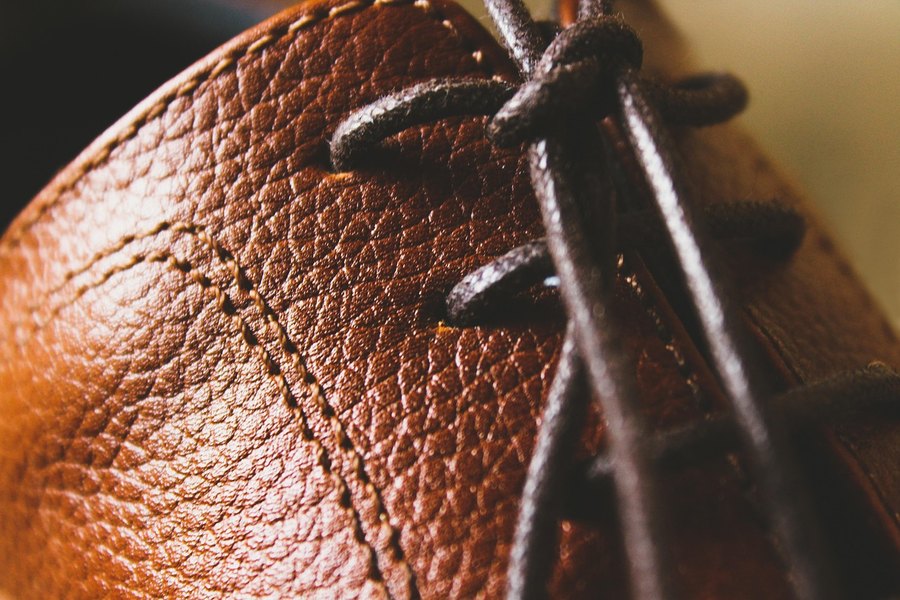
Sole thickness decides the first month; the upper decides the second year. A full-grain calf upper with a leather lining molds to the foot and holds its shape. Corrected grain, sanded and coated, resists water but creases sharply and cannot be polished back to a smooth surface. Bonded linings, where a synthetic layer is glued to the leather, separate at the flex point before the outsole wears through.
Construction decides whether the shoe can be repaired at all. A stitched welt takes two or three resoles. A cemented shoe usually takes one, and often none if the bond has failed at the toe, where the flex is hardest on the cement. For a shoe worn five days a week, that difference is the entire cost argument.
What the shoe does to the trouser
Sole thickness and heel height together set the hem. A 25 mm sole raises the trouser hem by roughly an inch relative to a leather-soled shoe, which is the difference between a full break and none at all. The arithmetic is the same one that governs inseam against heel height, and it is why trousers that hang correctly over one shoe can look short over another.
The fix is either a hem cut for the thicker sole or a shoe with a slimmer profile. Buying the trousers before the shoe is settled is the usual order and the wrong one, since the hem is the cheaper thing to change once and the shoe is the thing that gets worn every day.
Where the advice stops working
These ranges assume a foot of average width and an average instep. A wide forefoot needs a last that is wide at the ball rather than a size up, because length added to gain width puts the flex point past the joint and the shoe creases across the toes. A high instep needs lacing with room to open, which rules out most slip-on loafers regardless of sole.
A foot that needs a removable insole loses about 4 mm of internal depth, so a cupsole with a glued-in footbed is a poor candidate no matter how well it walks. And a commute that includes stairs, a bicycle or a mile of gravel puts a premium on tread and heel stability that a smooth leather sole cannot provide at any thickness.
Cost of getting it wrong
The financial argument is short. A cemented topy costs a fraction of a resole and doubles the working life of a leather sole in wet weather. A resole costs a meaningful share of a mid-priced shoe and more than most inexpensive ones are worth. A pair bought in the wrong width cannot be fixed by either.
The return window closes the moment the shoe meets pavement, which makes the flex test and a twenty-minute walk around the shop the only free checks available. Everything after that is an outfit decision: color, formality, and whether the shoe survives the change from street to desk described in the twelve-hour outfit.
Frequently asked
- How thick should a commuting sole be?
- Under 10 mm at the forefoot transmits every grate and tree root, and 15 to 25 mm covers most pavement without deadening the walk. Above 30 mm without a flex groove at the ball, the foot works like a lever.
- Are leather soles usable in rain?
- They are usable and they are slippery. Smooth leather loses grip on wet stone and painted crossings, and water wicks through the welt. A cemented rubber topy of about 1.5 mm fixes both for roughly $30 to $45.
- How long does break-in actually take?
- Lined calfskin moves about 2 to 3 mm across the vamp over 10 to 20 miles of walking, which is two weeks of alternating wear. Patent, corrected grain and bonded linings barely move at all.