The formula · Outfit Formulas
How Many of Each Piece You Actually Wear
A realistic count of tops, bottoms, layers and shoes by slot, the ratio that keeps a wardrobe working, and what an overfilled slot costs.
A closet holding thirty tops and four pairs of trousers will still produce the same six outfits, because variation above the waist has nothing to vary against below it. Counting by slot shows the imbalance in about ten minutes and usually produces a smaller number than expected. The figures below assume a temperate climate, a five-day working week and a weekly wash; they are a baseline to adjust, not a quota to hit.
Count the slot, not the garment
A blazer and a rain shell both occupy the layer slot. A shirt and a fine-gauge knit both occupy the top slot when neither is worn over the other. The test is position in the outfit, not the label in the collar: count a piece by the job it does in the combination worn most often. A cardigan buttoned to the neck is a top; the same cardigan open over a tee is a layer. Counting it in both slots inflates the total and hides which slot is actually short.
Count only what fits today and gets worn. Anything waiting on an alteration, stored for a climate the wearer does not live in, or held for a job that ended comes out of the total first. The four-piece formula explains why the slots are separated at all; the count is the step that follows.
A ratio that survives a normal week
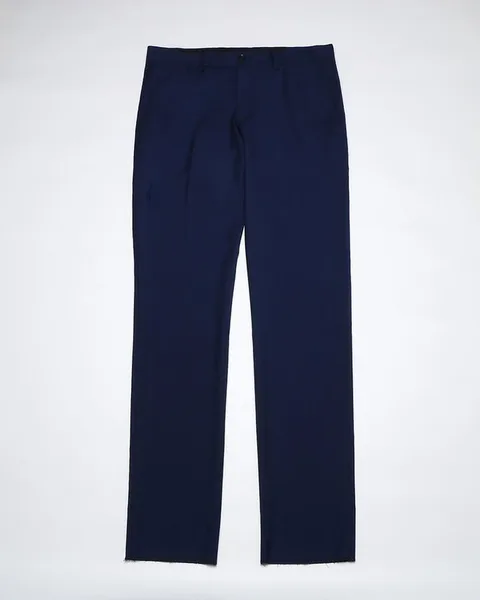
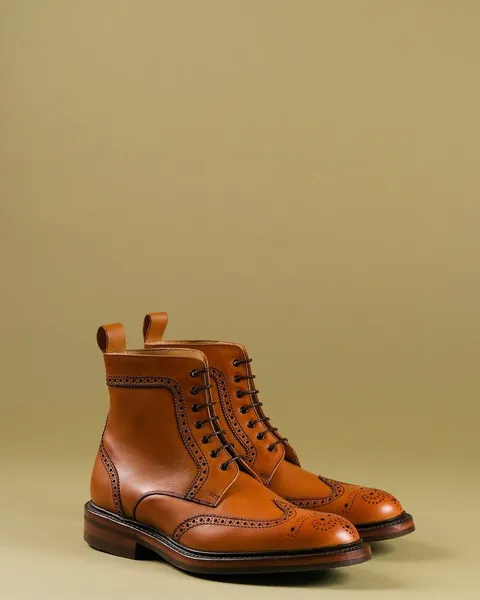
A workable baseline is twelve tops, six bottoms, four layers and three pairs of shoes. The arithmetic behind it is weekly rather than theoretical. Five wear days need roughly five tops and five bottoms between washes; twelve tops give each one a rest of a week or more, which matters because cotton and fine knit lose shape when worn two days running. Six bottoms cover a working week with one spare for the day the first choice is at the cleaner. Four layers cover a mild day, a cold day, a wet day and one formal occasion. Three shoes cover dry, wet and dress.
| Slot | Count | What it covers |
|---|---|---|
| Tops | 12 | Two per wear day, a week of rest each |
| Bottoms | 6 | Five wear days plus one spare |
| Layers | 4 | Mild, cold, wet, formal |
| Shoes | 3 | Dry, wet, dress |
Read the table as a floor per slot. A slot below its floor is the one to buy into. A slot far above it is the one to stop buying, whatever the sale.
Why two tops per bottom
The two-to-one ratio is not an aesthetic preference. Tops sit against the neck, the underarm and the cuff, which are the three places a garment soils first. They also go through the wash more often, so each one spends a larger share of its life in a laundry cycle rather than on the body, and a top washed after every wear needs a partner to cover the drying day. Bottoms are washed less often, cost more to alter, and are decided by rise and hem, which change slowly.
The ratio breaks in predictable places. A household that runs a wash every day can drop toward 1.5 tops per bottom without noticing. A uniform that fixes the top removes the variable entirely. A hot climate doubles top turnover, because a shirt worn once at 90 F cannot be worn twice.
The cost of an overfilled slot
Take the baseline and double the tops to twenty-four while the bottoms stay at six. If a top in a twelve-piece rotation is worn twice a month, each of twenty-four is worn once a month: twelve wears a year instead of twenty-four. A USD 90 shirt moves from USD 3.75 a wear to USD 7.50 in its first year, before cleaning. The price per wear arithmetic is blunt about what an extra purchase does to the pieces already owned.
The costs that never reach a statement matter as much. Dense rail storage creases sleeves and crushes collars, so the overfilled slot generates ironing. More choice against an unchanged silhouette lengthens the morning without improving the result, because every new top is being matched to the same six bottoms. And the unworn tail disguises the real shortage, which is usually the bottom slot or the shoe slot, so the next purchase repeats the error.
What an overfilled bottom slot does instead
Bottoms fail differently. Fourteen pairs against eight tops does not halve the wear per bottom so much as multiply the constraints. Each pair is hemmed for one heel height, so a wider range of trousers demands a wider range of shoes; each rise decides which tops can be tucked; each fabric adds a cleaning rule. A hem alteration runs USD 15 to 30 at a high-street tailor, and a pair that also needs the waist taken in rarely earns that back.
The silhouette stops changing as well. Most overfilled bottom slots are variations on one shape in several colors, so the outfit reads the same from the waist down whichever pair is chosen. The correct fix is retirement, not another top.
The eight-week count and its blind spots
Count wears over eight weeks rather than estimating. Fifty-six days includes a full weather cycle and is short enough to remember. Anything worn fewer than three times in that window is running at roughly twenty wears a year, which is the threshold worth acting on.
The count has four blind spots. Season is the largest: a coat worn hard from November to February will look dead in a July count. Occasion is the second, since one interview suit earning four wears a year is doing its job. Laundry is the third, because a piece worn twice and washed once may be in the basket rather than out of favor. Remote work is the fourth, since a week of video calls removes the bottom and shoe slots from the sample entirely. Run the count inside the season the piece belongs to, and treat a low tally as a question rather than a verdict.
Filling a short slot, and stopping there
Buy only into the slot below its floor, and buy one piece at a time so the effect on the rest of the slot is visible. Any purchase into a slot already above its floor should displace something, or the ratio moves further in the wrong direction. The wardrobe audit runs the same test across all four slots and is the better exercise before a seasonal shop.
The cost of skipping the count is a return, an alteration, or a garment that spends its life on the rail. None of those is recoverable at resale, and the count takes less time than the parcel.
Frequently asked
- How many tops should a workable wardrobe hold?
- About twelve, against six bottoms, four layers and three pairs of shoes. That ratio gives two tops for every bottom, which is enough variation at the neckline without leaving half the tops unworn in a given month.
- Is it better to own more bottoms or more tops?
- More tops, up to a point. Bottoms carry the rise and leg line, so six good pairs cover the week. Tops sit close to the face and show wear at the collar first, so they need more turnover and a higher count.
- What counts as an unworn item?
- Fewer than three wears across eight weeks, which works out at roughly twenty wears a year. That threshold is a useful audit rule because it catches the pieces bought for one occasion without penalizing a coat worn hard for four months.