The office · Workwear
Summer Office Dressing Without a Jacket
Linen, cotton poplin and fine-gauge knit, with the shoulder seam and rise numbers that hold a silhouette when the jacket stays at home.
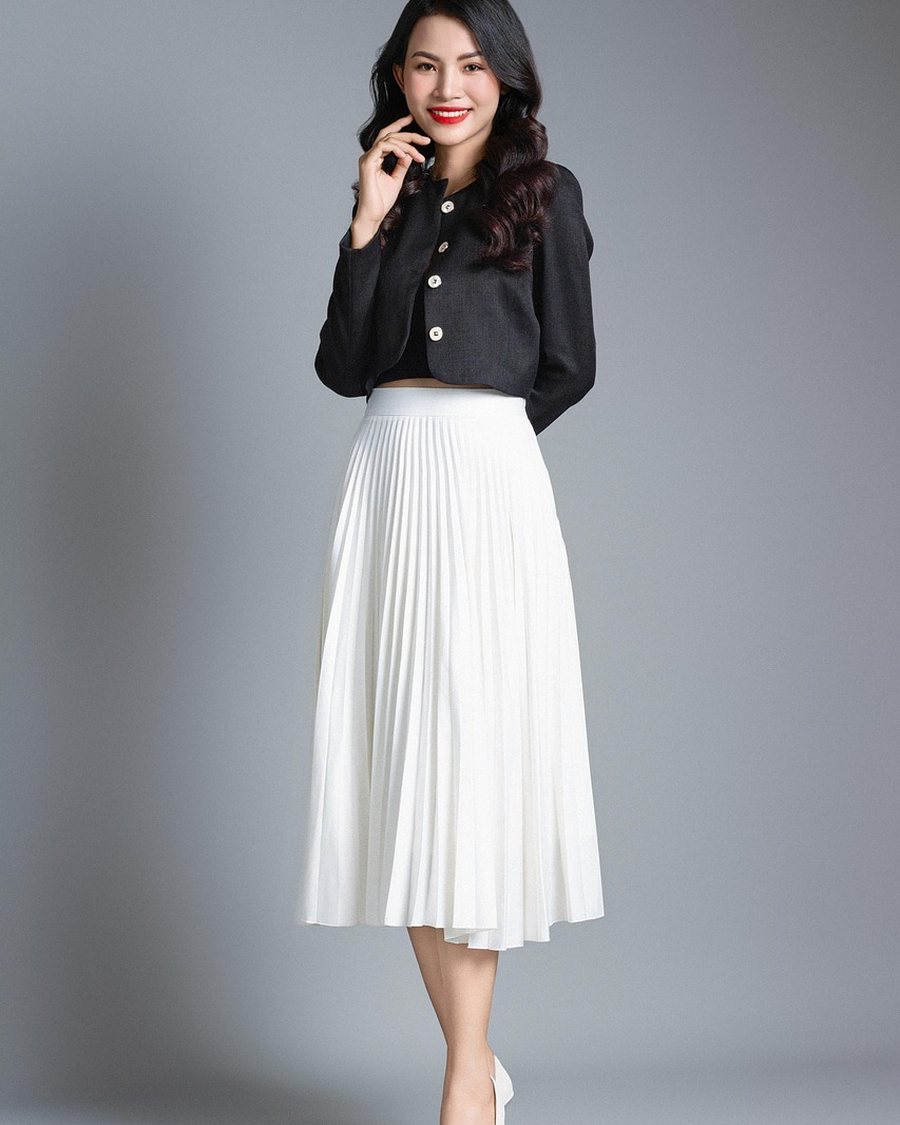
Removing the jacket removes the garment that was holding the outfit’s shape. What remains has to carry the shoulder line, the waist and the vertical drop on its own, at 85 degrees Fahrenheit, through a commute and a cold conference room. Only a small group of fabrics and constructions manages that, and almost all of them are decided by numbers printed on a label.
What the jacket was holding
A jacket draws three lines at once: the shoulder seam and pad make a horizontal, the lapel and front edge make a vertical from neck to hem, and the hem ends the outfit cleanly at the hip. Remove the jacket and all three disappear, which is why an outfit that simply omits it reads as incomplete rather than relaxed.
Each line then has to come from another garment, and each has a measurement attached. The shoulder line comes from the seam placement of the top, the vertical from a tucked shirt or placket, the ending from the rise of the trouser and the length of the hem.
Weight and weave before fiber
Weight is the number brands publish most often, and it is the one that predicts the least on its own. GSM measures mass per square meter, not breathability. A tightly woven 120 GSM poplin is hotter than an open 180 GSM linen because air moves through the second and not the first.
| Fabric | Typical weight | What it does |
|---|---|---|
| Cotton voile | 70-90 GSM | Very cool, creases badly, too sheer for trousers |
| Cotton poplin | 110-130 GSM | Holds a press, blocks sun, poor airflow |
| Linen shirting | 140-190 GSM | Best airflow, creases at elbow and lap |
| Cotton-linen blend | 150-170 GSM | Most of the airflow, less creasing |
| Piqué | 180-220 GSM | Recovers from sitting, structured surface |
| Tropical wool | 200-240 GSM | Hangs cleanly, resists odor, warm in sun |
The second number is fiber regain, which is how much moisture a fiber takes up before it feels wet. Cotton holds roughly 8 percent of its weight in water before it reads as damp; linen about 12; wool considerably more, with Woolmark’s technical notes putting the figure at around 30 percent before the fabric feels wet. That is why a lightweight wool trouser survives a humid day that leaves a cotton one clinging at the knee.
The third is fit: a shirt with two inches of ease at the chest moves air, and the same shirt worn slim does not, whatever the label says. The full argument on weave and heat sits in heat as a fabric weight problem.
Structure moves into the seam
A set-in shoulder seam resting at the outer edge of the shoulder, roughly at the acromion, gives a clean horizontal. A drop shoulder puts that seam two to three inches down the arm and reads as a sweatshirt at any price, which is the single most common reason a summer outfit looks casual when it was meant to look easy. The measurement and its variations are set out in shoulder seam placement.
The second line is the waist. A front rise of 10 to 11 inches with a tucked shirt puts the waistband at the natural waist and creates the break a jacket would have covered. A 9-inch rise on the same body leaves a longer uninterrupted torso and a lower visual waist, which is why rise changes formality more reliably than color does.
The third line is the hem. A skirt or trouser that ends cleanly, with no break and no pooling, substitutes for the jacket’s bottom edge. One crisp element is enough: a creased trouser with a soft knit, or a stiff poplin shirt with a fluid skirt. Two crisp elements at once read as a suit that lost its jacket.
The overshirt and the fine-gauge knit
An unlined cotton overshirt at 4 to 6 ounces, worn open over a tank or a fine knit, does something a summer blazer cannot: it adds a vertical edge with no lining and no pad. Body length decides what it becomes. At 28 to 30 inches it covers the seat and reads as a light jacket; at 25 inches it reads as a shirt and shortens the torso.
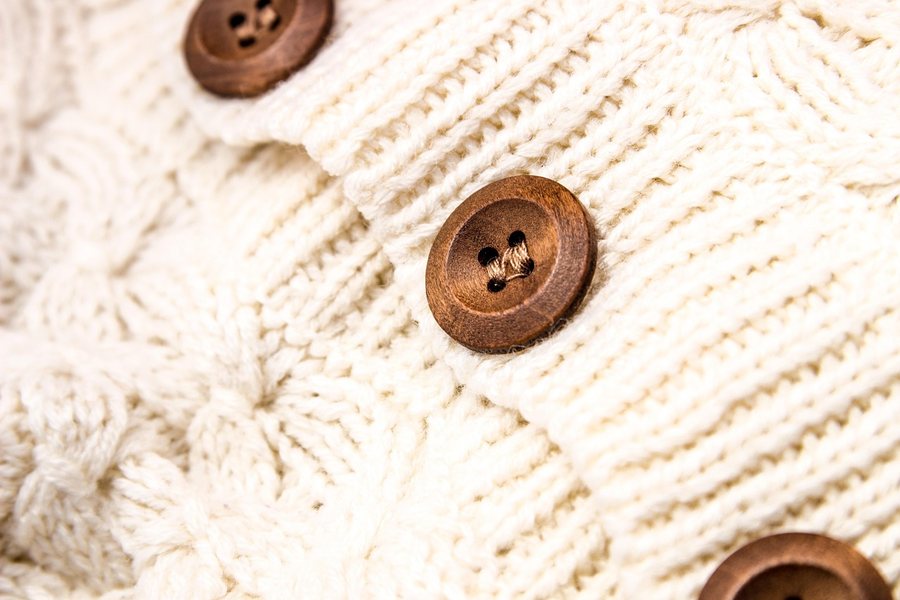
Inside an air-conditioned office the substitute is a 12-gauge cardigan rather than a heavier overshirt. Fine gauge holds its shape across a day of sitting in a way linen does not, and it layers over the same poplin shirt without adding bulk at the armhole. The gauge arithmetic is in knit gauge at a desk.
Heat, humidity and color
Evaporative cooling is the whole mechanism, and humidity is what stops it. At 60 percent relative humidity sweat evaporates and cools; at 85 percent it sits on the skin, and no fabric weight will fix it. In that weather the only useful variables are airflow through the weave and how far the cloth sits from the body, which is why a loose linen shirt beats a technical fabric worn close.
Color matters less than fit in direct sun and more than expected in still air. A dark, loose garment heats the air trapped between cloth and skin, that air rises, and drier air is drawn in behind it, which is why a black linen shirt can feel cooler than a tight white one on a walk. The condition is loose; worn close, dark cloth simply absorbs.
Sweat marks are the practical limit. Linen shows damp at the small of the back within about twenty minutes of a warm platform, and mid-gray or ecru shows it less than white or navy. A thin cotton undershirt does not cool the body, but it keeps the shirt off the skin, which reduces both the mark and the odor.
The commute is the hard part
An office at 68 degrees and a platform at 90 are two different climates, and the outfit has to survive the transition without a change of clothes. Three habits do most of the work.
Carry the layer rather than wear it: a 12-gauge cardigan folds into a bag without creasing and goes on at the desk. Choose the shoe for the walk and keep a second pair under the desk, since a leather sole on hot pavement is a twenty-minute limit. And accept one crease: a linen shirt that arrives with a fold at the elbow is wearing correctly.
The bag strap ruins more summer outfits than the heat does. A wide strap over a linen shoulder crushes the weave in a line that does not recover during the day, and a crossbody leaves a diagonal mark across a light shirt. Carry a top-handle bag, or wear the strap under the collar rather than across it.
Where the summer rules break
An office without air conditioning overrides the fabric table. Above about 80 degrees indoors, airflow beats structure, and the outfit is the lightest open weave that still covers the shoulder, with the tailoring argument postponed to September.
A client meeting overrides the season. Linen creases in the car and reads as leisure in a room where everyone else is in wool, and the fix is a tropical wool suit at 200 to 240 GSM. This is the one place where paying more buys comfort rather than status.
And a conservative room breaks the sleeveless option. Where shoulders are covered by custom rather than policy, a short-sleeve poplin shirt is the substitute, not a tank with a jacket carried in reserve.
What dressing cool costs
Linen costs time rather than money. A shirt worn twice between washes needs about four minutes with a steamer, and pressing it flat defeats the reason to own it. Cotton poplin costs less time and more heat: it holds a crease through a day but blocks airflow, which matters on a commute that involves waiting outdoors.
The cheapest summer wardrobe is not the lightest one. Two poplin shirts and one linen shirt, rotated, will outlast five linen shirts worn hard, because linen loses its crispness at the collar and cuff long before the body wears out.
Frequently asked
- What fabric weight works in a hot office?
- Cotton poplin at 110 to 130 GSM holds a crease and blocks sun. Linen shirting at 140 to 190 GSM breathes better and wrinkles faster. Anything above 200 GSM in either fiber is a September fabric.
- How do you look tailored without a jacket?
- Shoulder seam placement does the work a shoulder pad would. A set-in seam sitting at the outer edge of the shoulder, a rise of 10 to 11 inches and a tucked shirt give the eye three lines to read.
- Is a knit too casual for an office in summer?
- At 12 gauge or finer, no. A fine-gauge crew neck has a smooth surface and a defined shoulder, and it holds shape through a day of meetings better than linen. A 7-gauge knit reads as outerwear and belongs to fall.